Multiple Variants vs Multiple Products
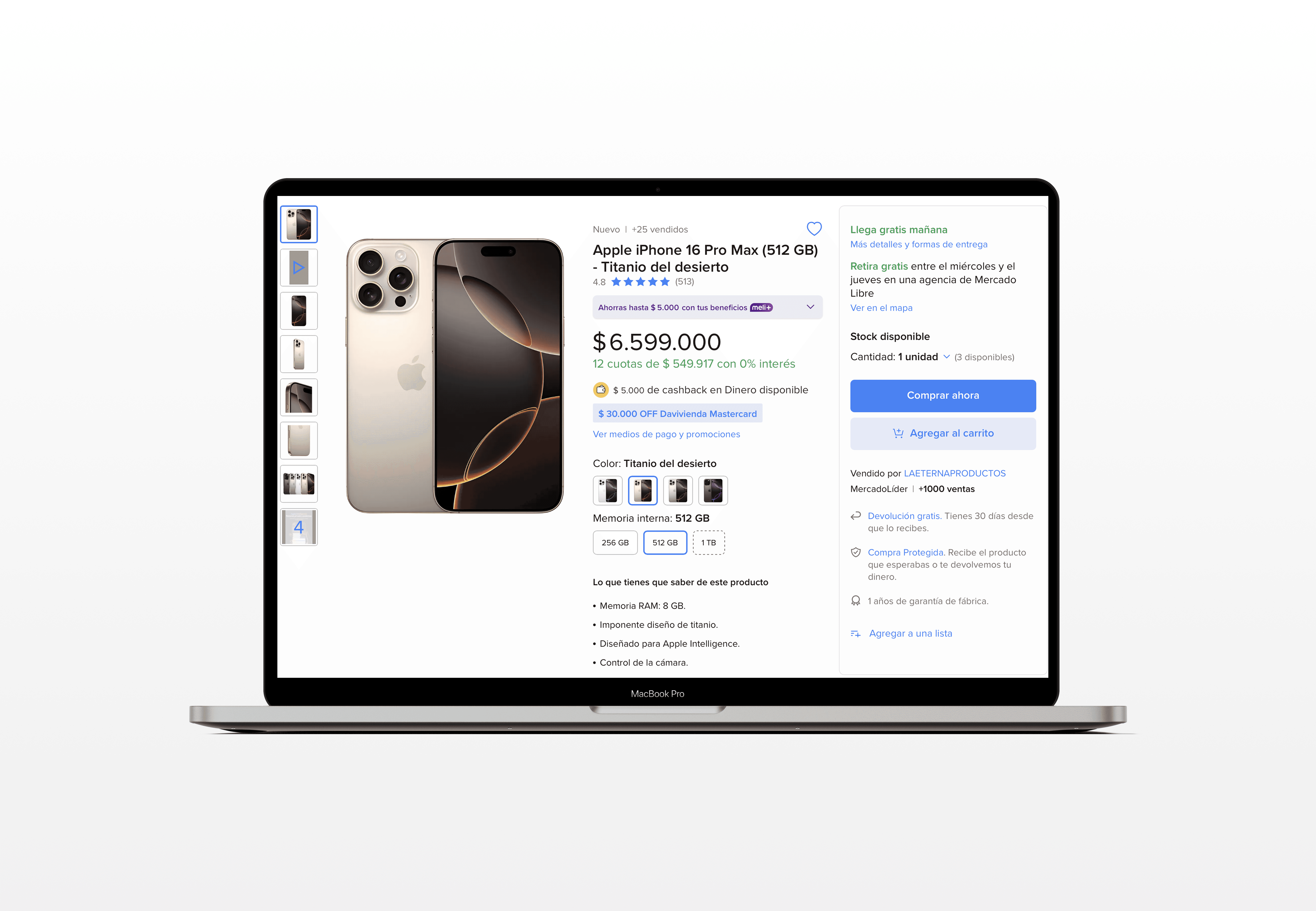
Client:
Mercado Libre
Scope:
Product Design, Stakeholder Management, Research
Year:
2025
Summary
Iterating design decisions amidst an architecture shift at Mercado Libre. This project was about reframing user confusion as a mental model transition problem. I led research initiatives and designed conceptual design that aimed to increase adoption.
Project
Context
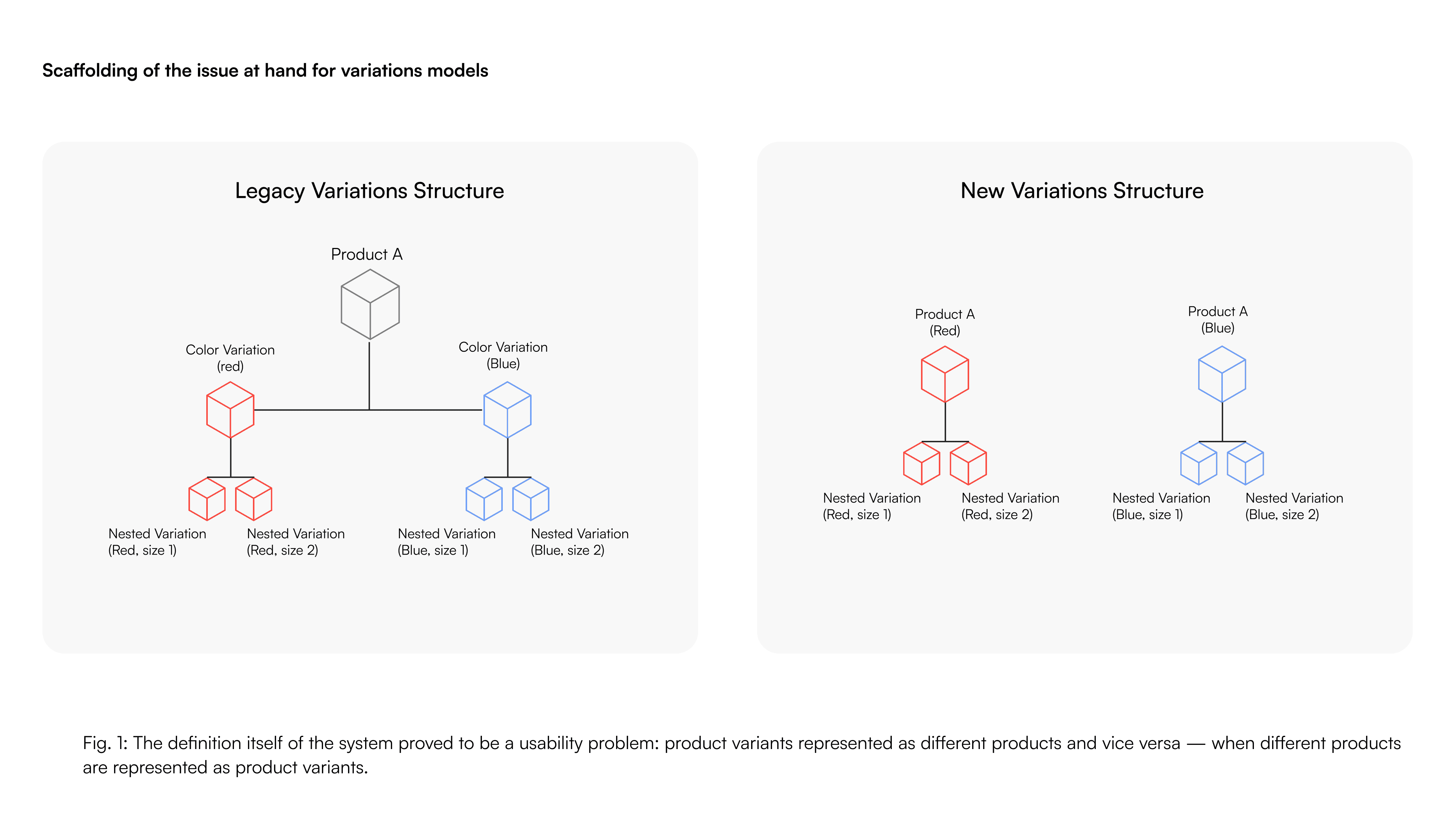
Mercado Libre's legacy architecture for 10+ years was built under the "The parent product, child variations for one listing" paradigm. On 2023, the business shifted: sellers needed independent pricing/shipping per variation to clear stranded stock. The solution at the time was to build a new model: "parent product, independent listings for its variations"
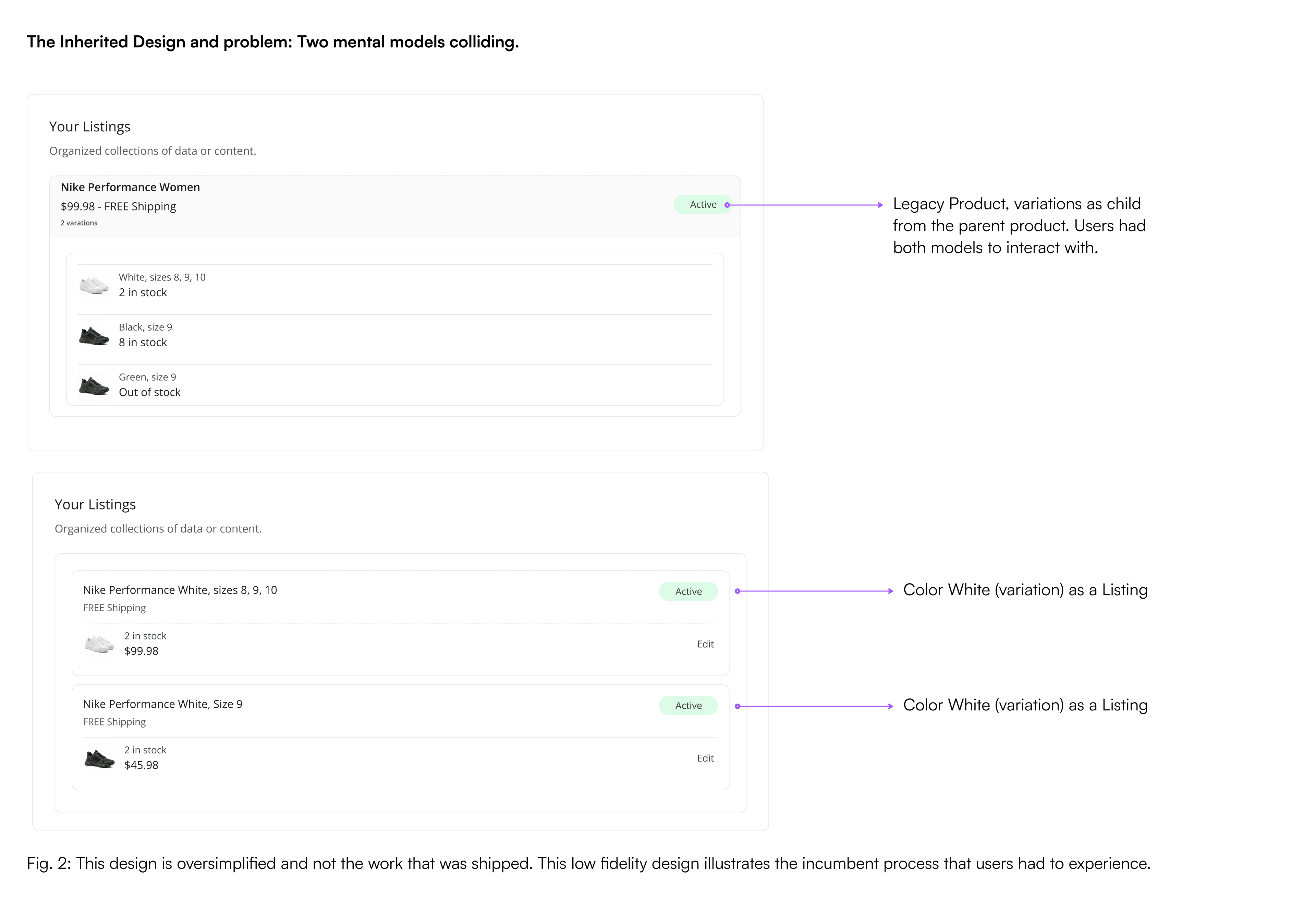
The problem I inherited: Rollout was already underway, but adoption was decreasing. CX had an uptick of 47% on matters related to the project.
Design Approach
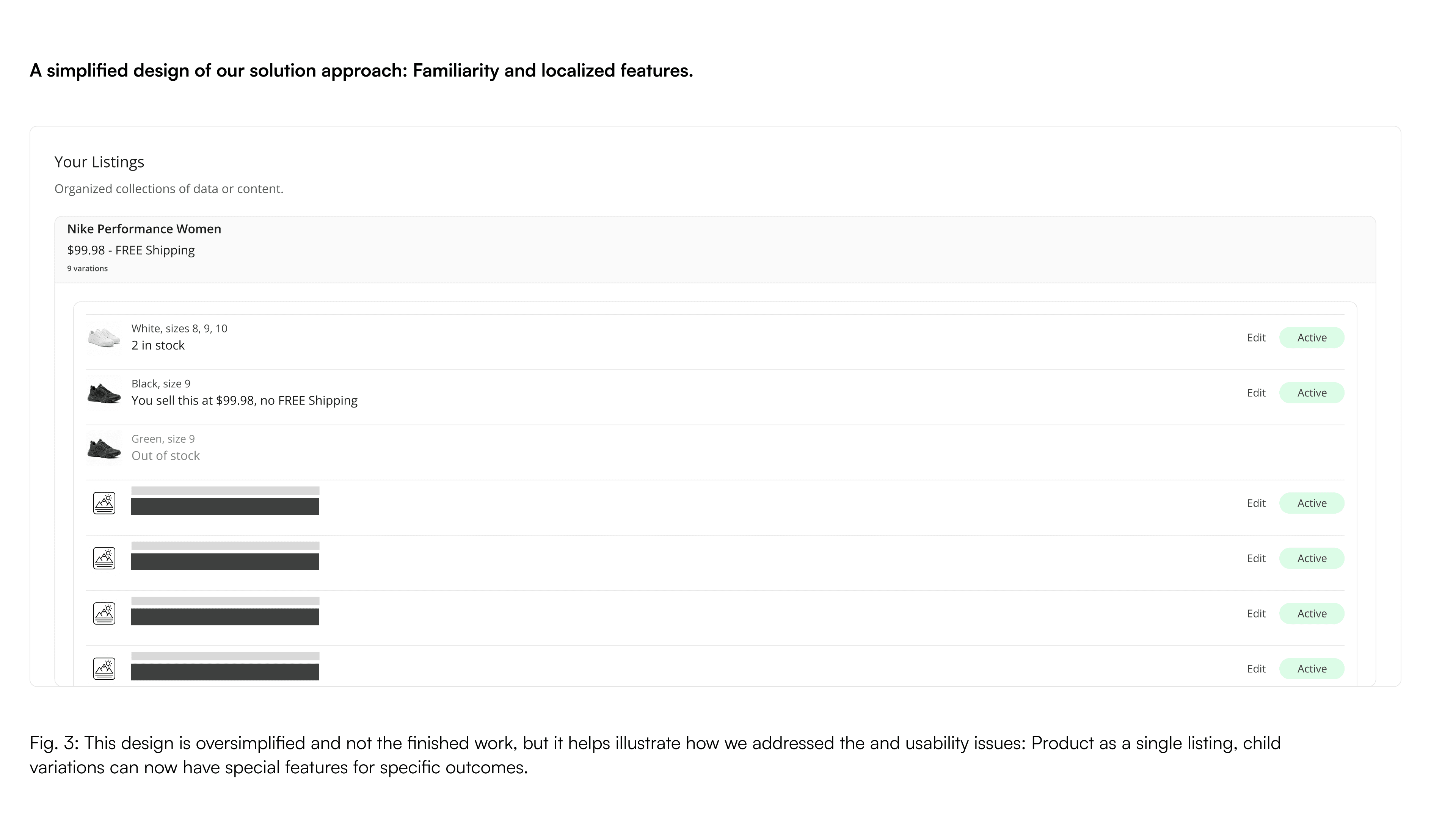
Rather than replacing the familiar parent-child model, I applied progressive enhancement strategy to preserve the visual structure sellers had used for a decade while adding per-variation controls.
Mental model overlap was solved through consistency of patterns of old workflows, continuing unchanged, while new capabilities layered on top.
Cognitive mismatch was addressed via progressive disclosure and clearer affordances. New features were hidden until needed, and visual cues dictated state of the variations.
Findability breakdown was addressed also by maintaining information architecture stability, listings remained in their expected locations, and controls appeared in-context and on demand.
The result: a solution that supported both old and new models simultaneously, designed for the transition state rather than an idealized end state."
Product Outcomes
Adoption of the solution approach reached 27% of eligible sellers by Summer 2025, up from 9% at the time of my intervention. Including Nike, on of the biggest sellers. The rollout stabilized enough to continue expansion to Markets and Categories.
What remained broken
CX inquiries did not decrease. The two mental models coexist permanently, which creates ongoing confusion and cognitive load for sellers transitioning between them. Although big sellers benefited from the solution, Small and local shops where deeply affected.